How Algae and Mold Affect Your Home (And How to Safely Remove It)
When homeowners in Windsor-Essex notice green streaks on siding or dark staining around shaded areas, it’s easy to brush it off as a cosmetic issue. After all, every home gets a little dirty over time, especially after winter and spring rain.
But algae and mold are different from ordinary dirt.
They grow, spread, hold moisture, and become harder to remove the longer they sit. What starts as a small patch near the side of the house or under an overhang can slowly become a larger exterior maintenance problem if it’s ignored.
For Windsor homeowners, especially those with shaded properties, mature trees, or areas that stay damp, understanding what these stains actually are is the first step toward protecting your home.
Why Algae and Mold Show Up on Your Exterior
Algae and mold thrive in damp, shaded environments. That makes many homes in Windsor and Essex County a natural target during spring and summer.
After months of snow, rain, and moisture, surfaces like siding, soffits, fascia, brick, stucco, and roofing can stay damp longer than expected. Areas that don’t receive much sunlight are especially vulnerable.
You may notice it first on:
- North-facing siding
- Areas near trees or shrubs
- Lower sections of the home
- Around gutters or downspouts
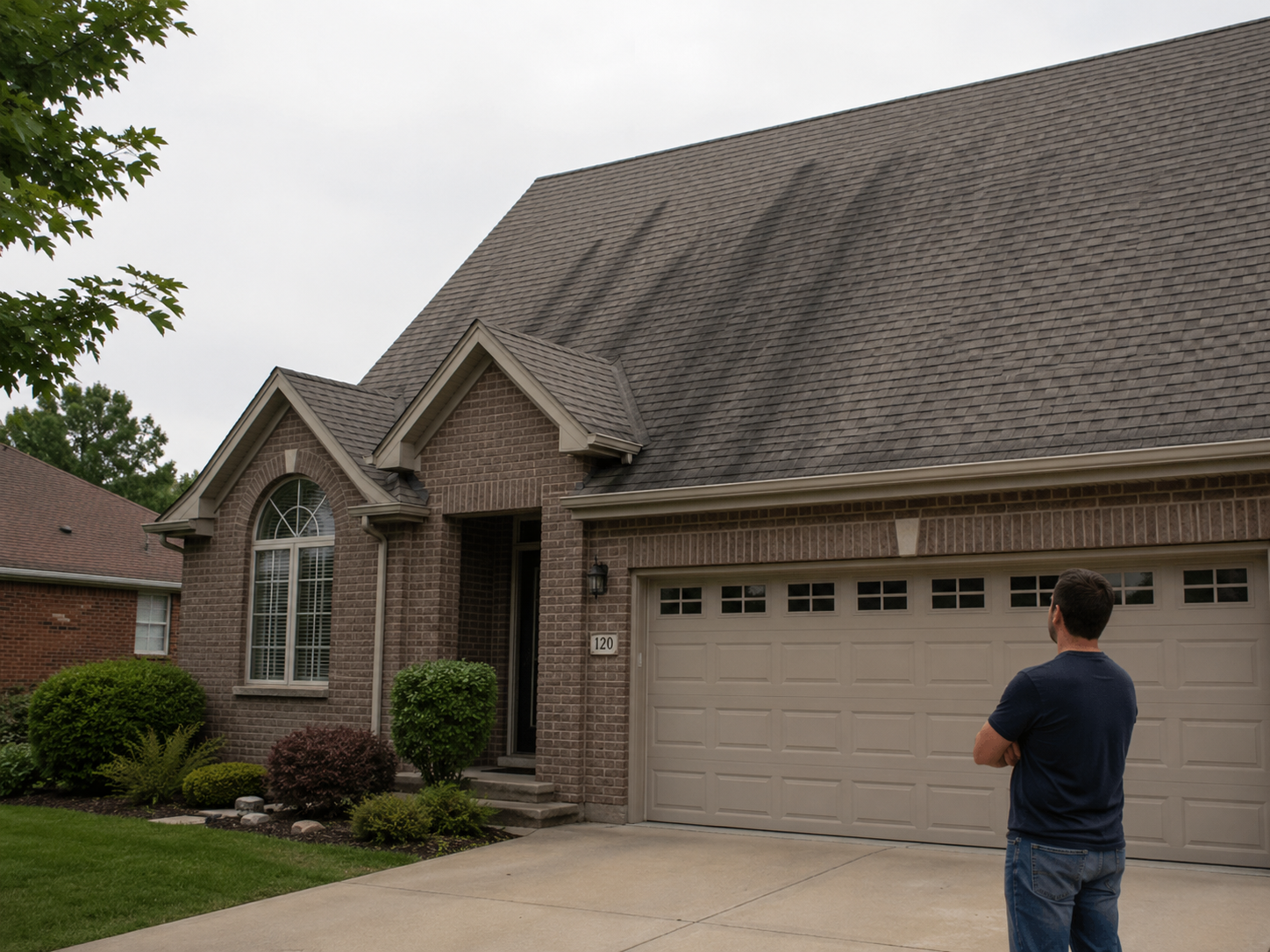
- Shaded roof sections
- Window trim and exterior corners
This is why algae on siding or roofs is often more than simple dirt. It’s usually a sign that moisture and organic growth have found a place to settle.
The Difference Between Dirt, Algae, and Mold
Dirt usually sits on the surface. It may make your home look dull, but it doesn’t grow or feed on moisture the same way organic buildup does.
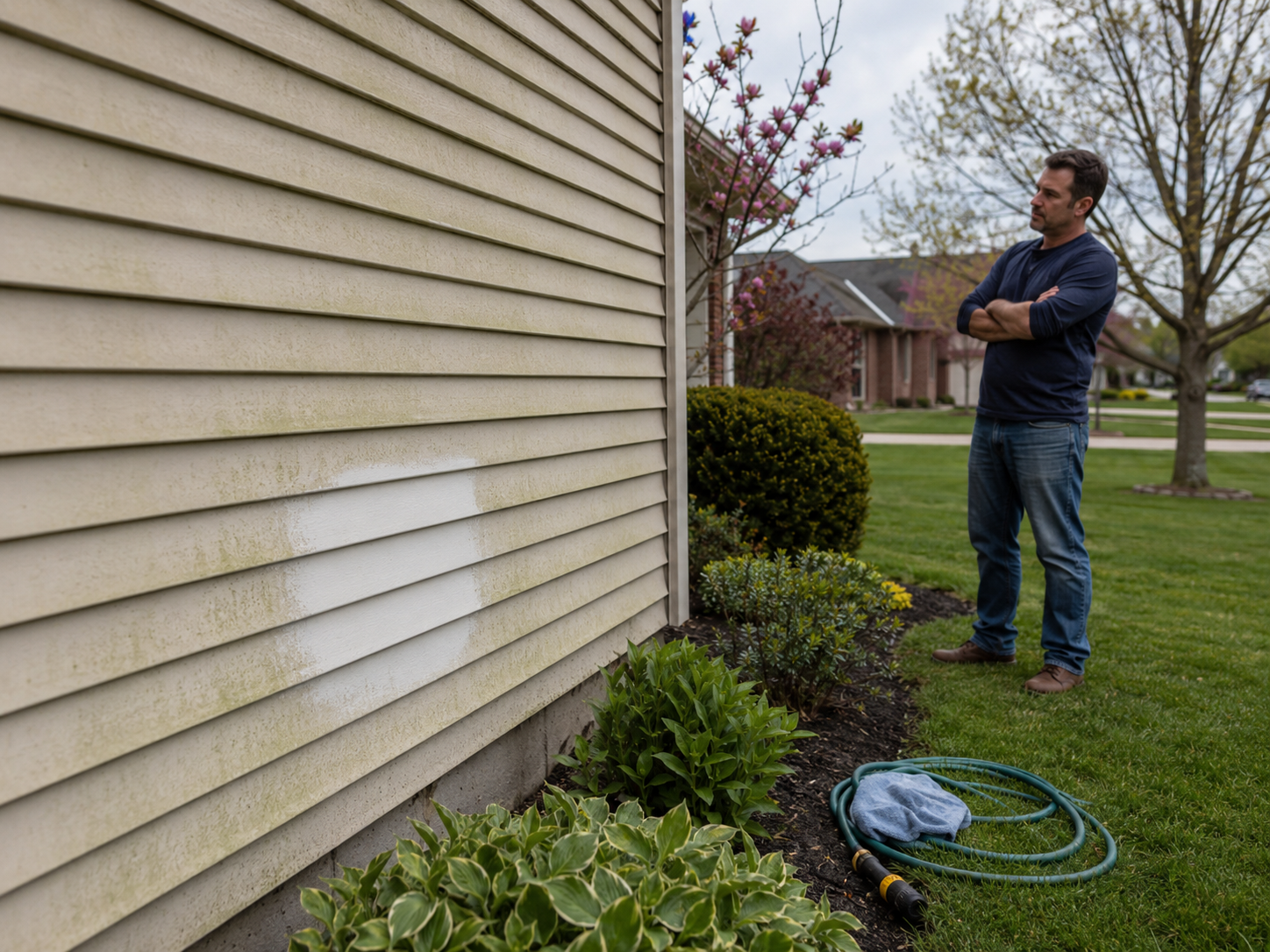
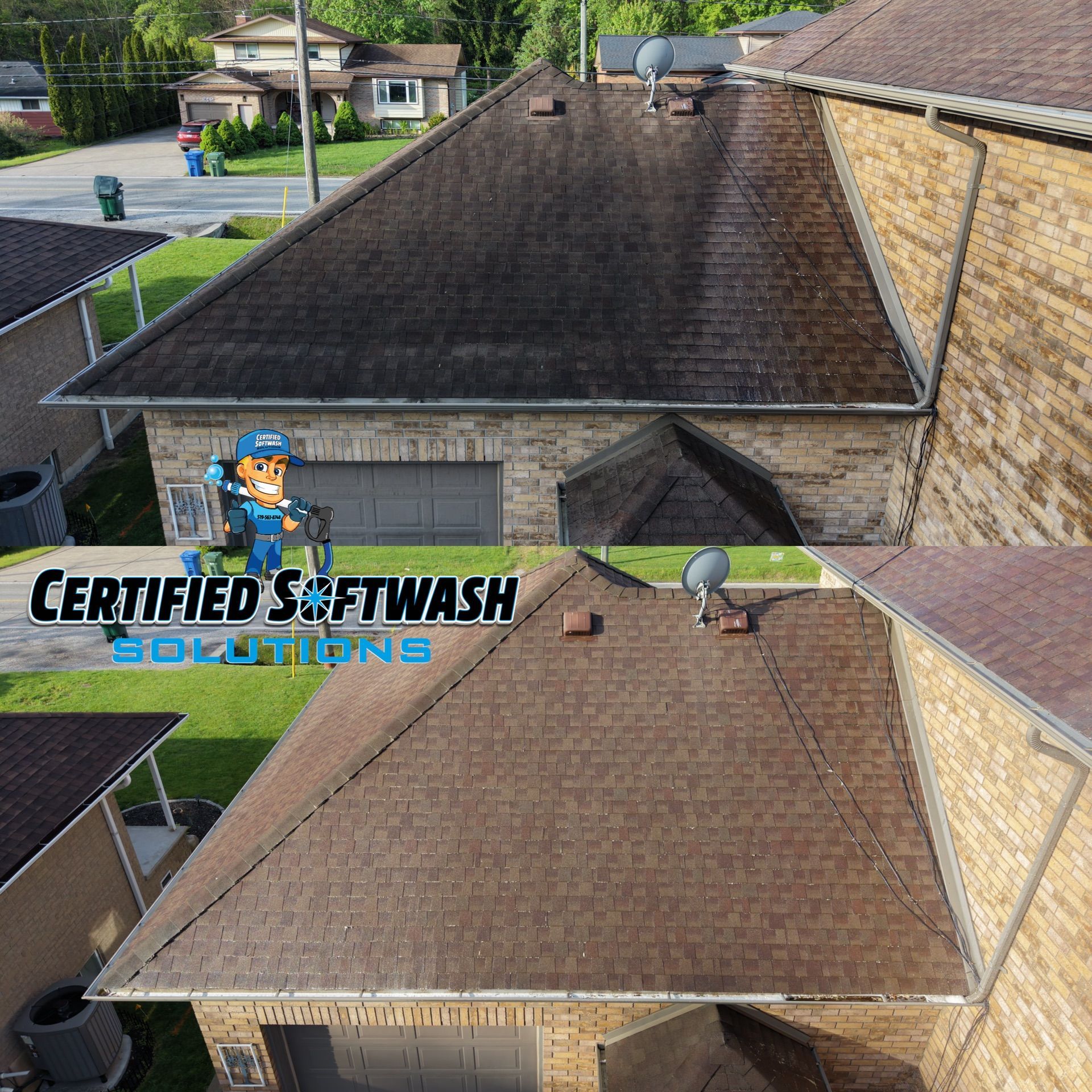
Algae often appears green and can spread across siding, trim, and other exterior surfaces. It tends to show up in streaks, patches, or hazy discoloration. Mold is often darker and can appear black, grey, or green depending on the surface and conditions.
The important thing to understand is that both algae and mold are active forms of buildup. They are not just stains. If the conditions are right, they can continue spreading.
That’s why simply rinsing the surface with water often doesn’t solve the problem. It may make things look better temporarily, but it doesn’t always remove the source.
How Organic Growth Can Affect Your Home
Algae and mold affect your home in a few different ways.
The first is appearance. Green or dark staining can quickly make a well-kept property look neglected, even if the rest of the home is in good condition. The second is moisture retention. Organic buildup can hold moisture against exterior surfaces. Over time, that constant dampness may contribute to wear, staining, and deterioration, especially on surfaces already exposed to weather.
The third is spread. Once algae or mold establishes itself, it can move across nearby areas if moisture remains present. A small patch on siding can become a larger issue across one side of the house.
For homeowners looking into mold removal exterior house services, the goal should not only be removing what is visible. It should also be treating the conditions that allowed the buildup to take hold.
Why Pressure Washing Isn’t Always the Right Answer
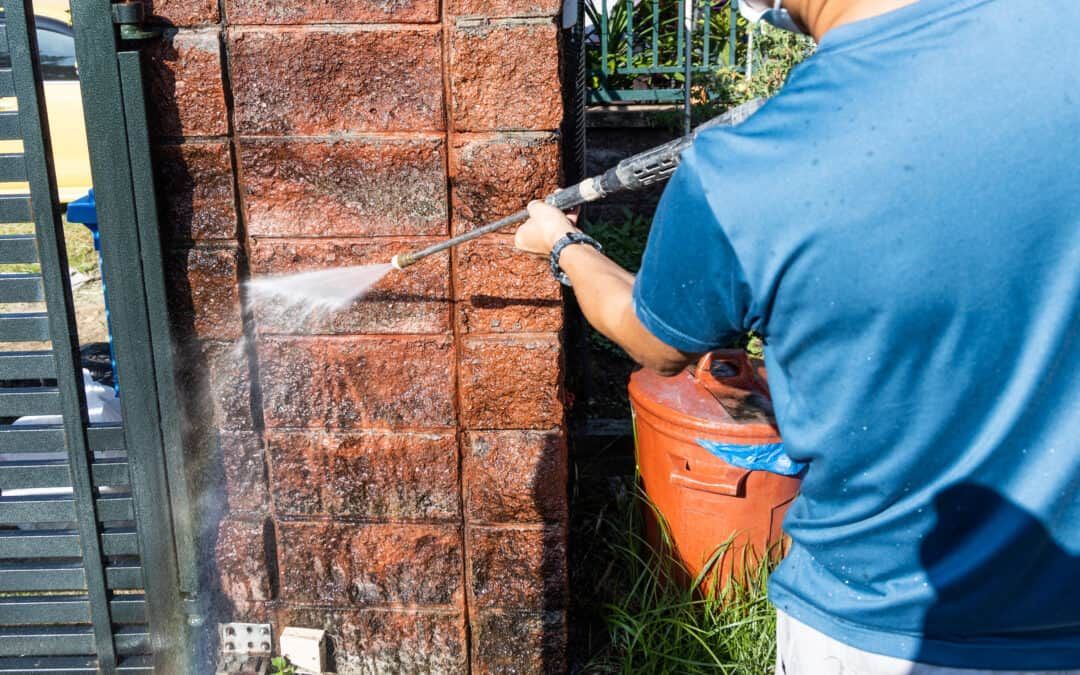
A common reaction to algae or mold is to blast it away with high pressure. On certain hard surfaces, pressure can have a place. But for many residential exterior materials, it can create unnecessary risk. High pressure can force water behind siding, damage painted surfaces, loosen trim, scar wood, or disturb roofing materials. In some cases, it removes the visible staining while leaving the underlying growth behind. That creates a frustrating cycle. The home looks cleaner for a short time, but the stains return because the problem wasn’t properly treated.
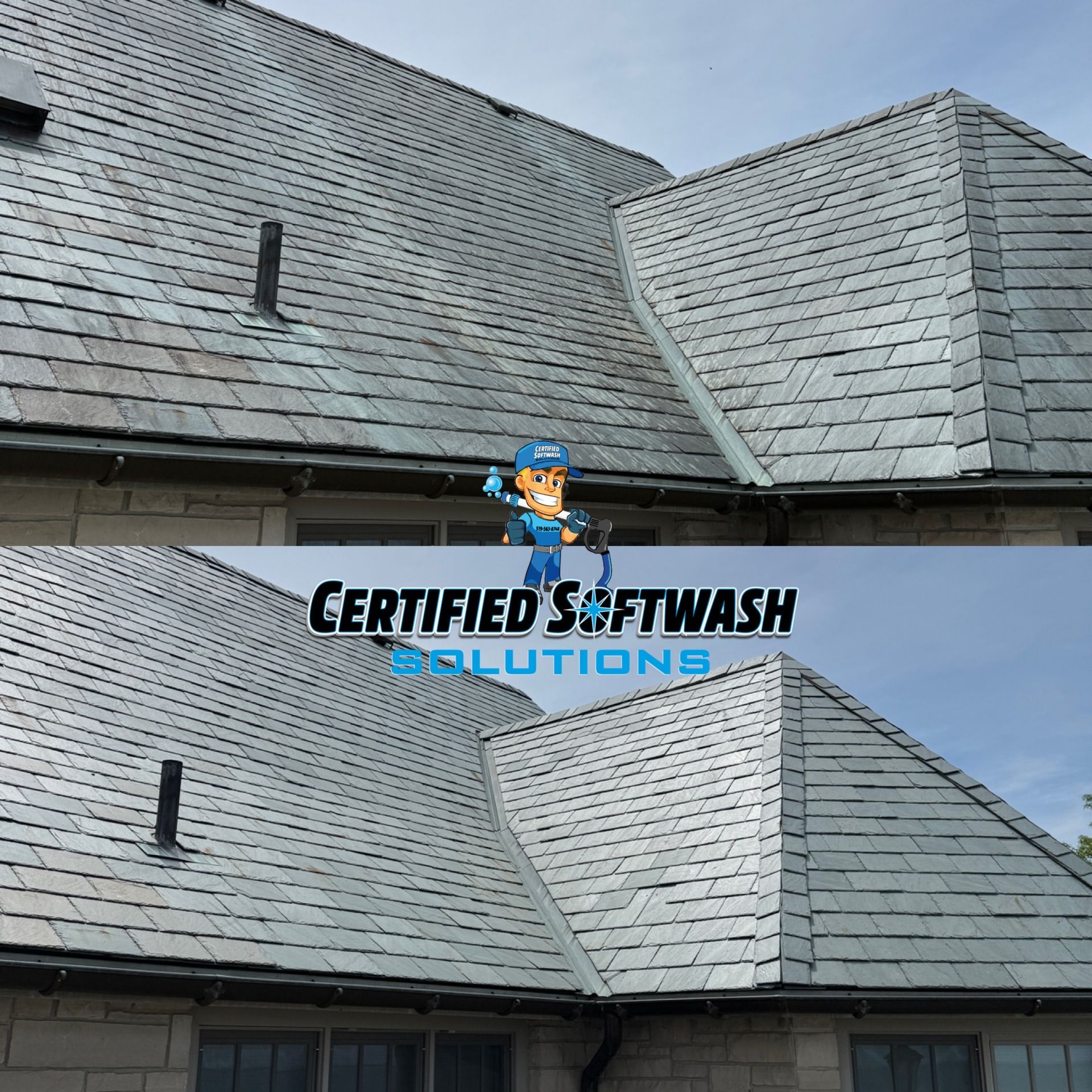
Softwashing takes a different approach. Instead of relying on force, it uses low pressure and professional cleaning solutions to break down organic growth at the source. This makes it especially effective for siding, roofing, stucco, and other more delicate exterior surfaces.
The Value of Safe Removal/Why Timing Matters
The safest way to handle algae and mold is to match the cleaning method to the surface.
Vinyl siding needs a different approach than roof shingles. Stucco needs to be treated differently than concrete. Painted wood, trim, and exterior fixtures all require care to avoid damage. This is where the real softwashing benefits become clear. Softwashing is designed to clean exterior surfaces without using aggressive pressure. It targets algae, mold, mildew, and other organic buildup while helping protect the material underneath. For homeowners, this means a cleaner home without the risk of unnecessary surface damage.
Spring and early summer are ideal times to address algae and mold because moisture levels are still high and buildup from the colder months is often visible. Waiting too long can make the cleaning process more difficult. As temperatures rise and humidity increases, organic growth may continue spreading. What could have been a straightforward cleaning job in May or June may become more noticeable by mid-summer.
A good rule of thumb is simple: if you can see green or dark staining from the ground, it’s worth addressing before it spreads further.
What Windsor Homeowners Should Watch For
You don’t need to inspect every inch of your home to know when there may be a problem. A simple walk around your property can tell you a lot.
Look closely at shaded areas, siding near landscaping, spots below gutters, and areas that stay wet after rain. If you notice streaks, patches, discoloration, or a slippery-looking surface, it may be time to have it professionally cleaned. It’s also worth paying attention to recurring stains. If the same area keeps getting dirty faster than the rest of the home, there may be a moisture or drainage issue contributing to the problem.
Final Thoughts
Algae and mold may start as small exterior stains, but they should not be ignored. They can affect your home’s appearance, hold moisture against surfaces, and spread when conditions allow. The good news is that they can be safely removed with the right method!
For most residential exterior surfaces, softwashing offers a safer and more effective solution than high-pressure cleaning. It removes organic growth at the source while helping protect the surfaces that make up your home.
If you’re noticing green stains, dark patches, or buildup around your home this season, Certified Softwash Solutions can help restore your exterior safely and professionally.
📞 Book your exterior cleaning service today and protect your Windsor-Essex home from algae, mold, and long-term buildup.